
Publication date: 14 July 2022
DOI: https://doi.org/10.14324/111.9781800082274
Number of illustrations: 9

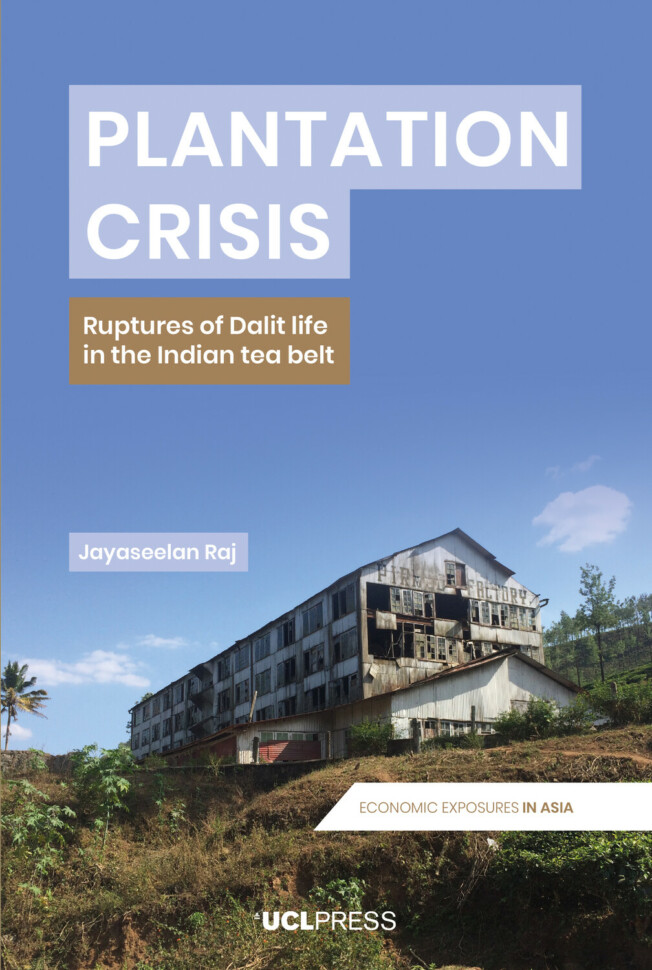
Plantation Crisis
Ruptures of Dalit life in the Indian tea belt
Jayaseelan Raj (Author)
Series: Economic Exposures in Asia
What does the collapse of India’s tea industry mean for Dalit workers who have lived, worked and died on the plantations since the colonial era? Plantation Crisis offers a complex understanding of how processes of social and political alienation unfold in moments of economic rupture. Based on long-term ethnographic fieldwork in the Peermade and Munnar tea belts, Jayaseelan Raj – himself a product of the plantation system – offers a unique and richly detailed analysis of the profound, multi-dimensional sense of crisis felt by those who are at the bottom of global plantation capitalism and caste hierarchy.
Tea production in India accounts for 25 per cent of global output. The colonial era planation system – and its two million strong workforce – has, since the mid-1990s, faced a series of ruptures due to neoliberal economic globalisation. In the South Indian state of Kerala, otherwise known for its labour-centric development initiatives, the Tamil speaking Dalit workforce, whose ancestors were brought to the plantations in the 19th century, are at the forefront of this crisis, which has profound impacts on their social identity and economic wellbeing. Out of the colonial history of racial capitalism and indentured migration, Plantation Crisis opens our eyes to the collapse of the plantation system and the rupturing of Dalit lives in India’s tea belt.
Related titles
Plantation Crisis
Ruptures of Dalit life in the Indian tea belt
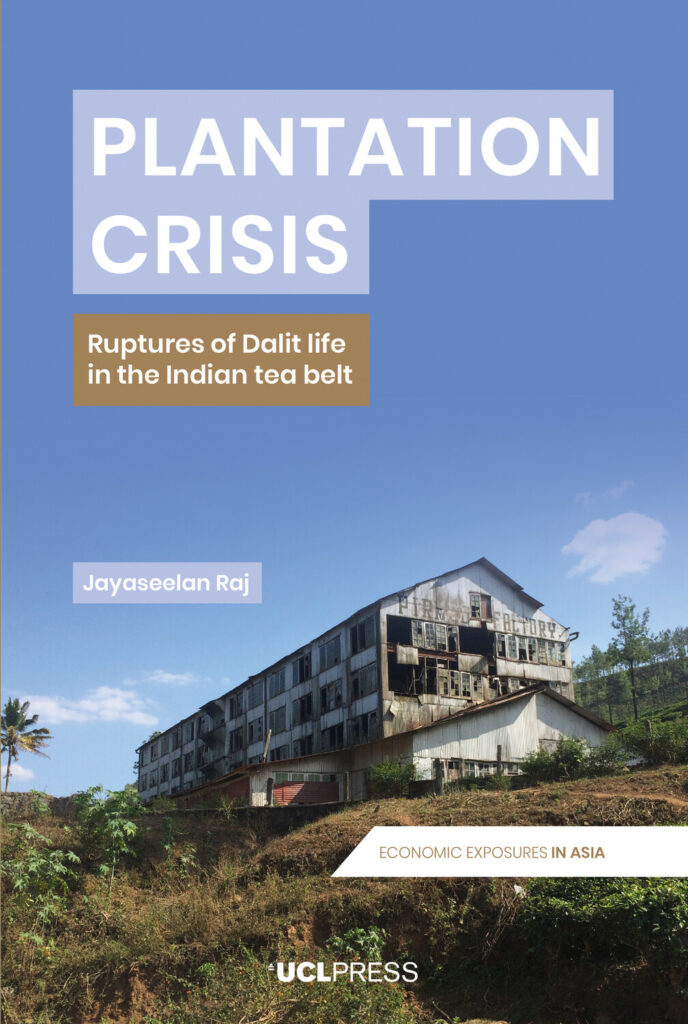
Series: Economic Exposures in Asia
Publication date: July 14, 2022
Open Access PDF ISBN: 9781800082274
Paperback ISBN: 9781800082281
Hardback ISBN: 9781800082298
Trim size (hardback): 23.4cm x 15.6cm
Trim size (paperback): 23.4cm x 15.6cm
What does the collapse of India’s tea industry mean for Dalit workers who have lived, worked and died on the plantations since the colonial era? Plantation Crisis offers a complex understanding of how processes of social and political alienation unfold in moments of economic rupture. Based on long-term ethnographic fieldwork in the Peermade and Munnar tea belts, Jayaseelan Raj – himself a product of the plantation system – offers a unique and richly detailed analysis of the profound, multi-dimensional sense of crisis felt by those who are at the bottom of global plantation capitalism and caste hierarchy.
Tea production in India accounts for 25 per cent of global output. The colonial era planation system – and its two million strong workforce – has, since the mid-1990s, faced a series of ruptures due to neoliberal economic globalisation. In the South Indian state of Kerala, otherwise known for its labour-centric development initiatives, the Tamil speaking Dalit workforce, whose ancestors were brought to the plantations in the 19th century, are at the forefront of this crisis, which has profound impacts on their social identity and economic wellbeing. Out of the colonial history of racial capitalism and indentured migration, Plantation Crisis opens our eyes to the collapse of the plantation system and the rupturing of Dalit lives in India’s tea belt.
‘Jayaseelan Raj’s book immensely contributes to the anthropological studies on caste and labour, the ethnography of development in Kerala, and methodological innovations of studying ‘one’s own community’ and the nuances and difficulties of being a ‘native anthropologist’ (p. xv). The ethnographical examples in the book could prompt the reader to interrogate the rhetoric of egalitarian Kerala.’
Contributions to Indian Sociology
‘Raj’s book is a grounded, relational and holistic ethnography of just what it means to be bearing the true costs of production in a global process of capitalist accumulation’
Journal of Agrarian Change
‘Emerging out of passionate ethnographic research, Jayaseelan Raj’s book Plantation Crisis gives us an insider’s perspective on the social, cultural, and economic world of the Tamil dalit workers in Kerala amidst crises.’
Social Change
‘This book will emphasise the importance of understanding social issues at the grassroots level and interpreting those issues and possible options for development through a cultural perspective.’
Australian Planner
‘This book will emphasise the importance of understanding social issues at the grassroots level and interpreting those issues and possible options for development through a cultural perspective.’
Review of Development and Change
‘An important, insightful and compelling story of the alienation of Tamil Dalit plantation workers, the disjuncture between economic and social mobility, the production of stigma and the role of caste and class, the failure of unions alongside that of the state and corporations, the destruction of labour organisation yet the possibility of finding resistance. Not only a major contribution to the South Asian literature but also a decolonisation “must read”.’
*Alpa Shah, London School of Economics *
‘Raj’s well-crafted ethnography offers profound and moving insight into the experience of Tamil Dalit plantation workers as they become alienated not just from their labour and its product, but from their families, communities, settlements and selves. An excellent read.’
*Tania Li, University of Toronto *