
Publication date: 26 January 2023
DOI: https://doi.org/10.14324/111.9781800083547
Number of illustrations: 247

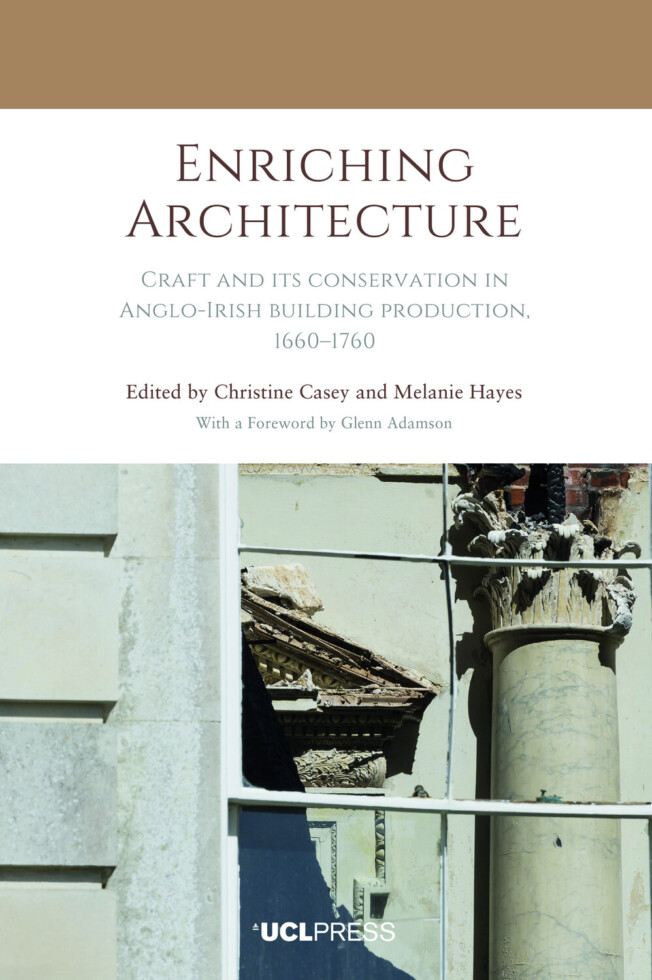
Enriching Architecture
Craft and its conservation in Anglo-Irish building production, 1660–1760
Christine Casey (Editor), Melanie Hayes (Editor)
Refinement and enrichment of surfaces in stone, wood and plaster is a fundamental aspect of early modern architecture which has been marginalised by architectural history.
Enriching Architecture aims to retrieve and rehabilitate surface achievement as a vital element of early modern buildings in Britain and Ireland. Rejected by modernism, demeaned by the conceptual ‘turn’ and too often reduced to its representative or social functions, we argue for the historical legitimacy of creative craft skill as a primary agent in architectural production. However, in contrast to the connoisseurial and developmental perspectives of the past, this book is concerned with how surfaces were designed, achieved and experienced.
The contributors draw upon the major rethinking of craft and materials within the wider cultural sphere in recent years to deconstruct traditional, oppositional ways of thinking about architectural production. This is not a craft for craft’s sake argument but an effort to embed the tangible findings of conservation and curatorial research within an evidence-led architectural history that illuminates the processes of early modern craftsmanship. The book explores broad themes of surface treatment such as wainscot, rustication, plasterwork, and staircase embellishment together with chapters focused on virtuoso buildings and set pieces which illuminate these themes.
Related titles
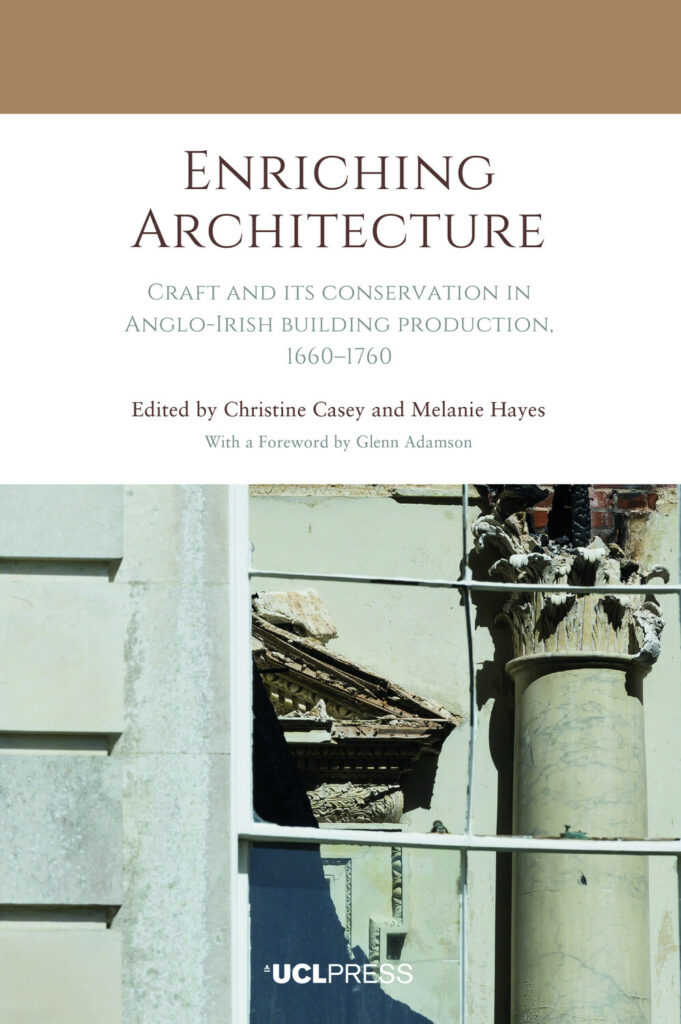
Enriching Architecture
Craft and its conservation in Anglo-Irish building production, 1660–1760
Publication date: January 26, 2023
Open Access PDF ISBN: 9781800083547
Paperback ISBN: 9781800083554
Hardback ISBN: 9781800083561
Trim size (hardback): 23.4cm x 15.6cm
Trim size (paperback): 23.4cm x 15.6cm
Refinement and enrichment of surfaces in stone, wood and plaster is a fundamental aspect of early modern architecture which has been marginalised by architectural history.
Enriching Architecture aims to retrieve and rehabilitate surface achievement as a vital element of early modern buildings in Britain and Ireland. Rejected by modernism, demeaned by the conceptual ‘turn’ and too often reduced to its representative or social functions, we argue for the historical legitimacy of creative craft skill as a primary agent in architectural production. However, in contrast to the connoisseurial and developmental perspectives of the past, this book is concerned with how surfaces were designed, achieved and experienced.
The contributors draw upon the major rethinking of craft and materials within the wider cultural sphere in recent years to deconstruct traditional, oppositional ways of thinking about architectural production. This is not a craft for craft’s sake argument but an effort to embed the tangible findings of conservation and curatorial research within an evidence-led architectural history that illuminates the processes of early modern craftsmanship. The book explores broad themes of surface treatment such as wainscot, rustication, plasterwork, and staircase embellishment together with chapters focused on virtuoso buildings and set pieces which illuminate these themes.
‘The essays in this volume collectively represent a substantial contribution to knowledge and are a tribute to all those involved.’
Construction History
‘Edited by Christine Casey and Melanie Hayes, eleven expert authors – conservators, curators, artists, geologists, historians and more – take a refreshing diversion from the embedded ‘top-down’ approach to analysing buildings through their designers and paymasters, instead drilling through archival records to learn about the skills and techniques of the shadowy souls who put them together.’
Irish Arts Review