
Publication date: 22 June 2023
DOI: https://doi.org/10.14324/111.9781800084452
Number of illustrations: 33

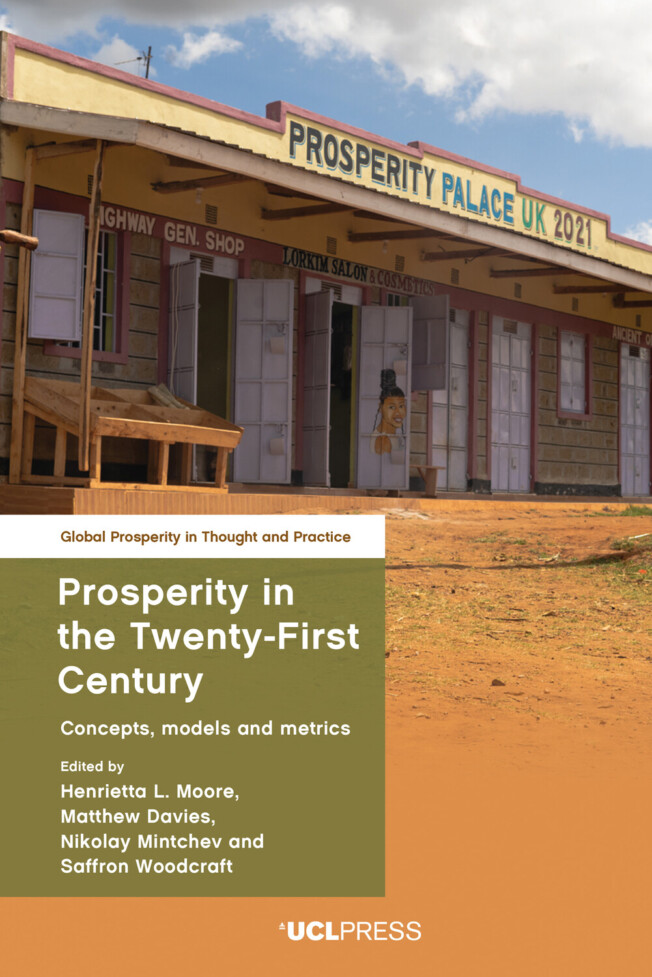
Prosperity in the Twenty-First Century
Concepts, models and metrics
Henrietta L. Moore (Editor), Matthew Davies (Editor), Nikolay Mintchev (Editor), Saffron Woodcraft (Editor)
Prosperity in the Twenty-First Century sets out a new vision for prosperity in the twenty-first century and how it can be achieved for all.
The volume challenges orthodox understandings of economic models, but goes beyond contemporary debates to show how social innovation drives economic value. Drawing on substantive research in the UK, Lebanon and Kenya, it develops new concepts, frameworks, models and metrics for prosperity across a wide range of contexts, emphasising commonalities and differences. Its distinctive approach goes beyond defining and measuring prosperity – addressing the debate about the failures of GDP – to formulating and describing what is needed to make prosperity a realisable proposition for specific people living in specific locales.
Departing from general propositions about post-growth to delineate pathways to prosperity, the volume emphasises that visions of the good life are diverse and require empirical work co-designed with local communities and stakeholders to drive change. It is essential reading for policymakers who are stuck, local government officers who need new tools, activists who wonder what is next, academics in need of refreshment, and students and people of all ages who want a way forward.
Related titles

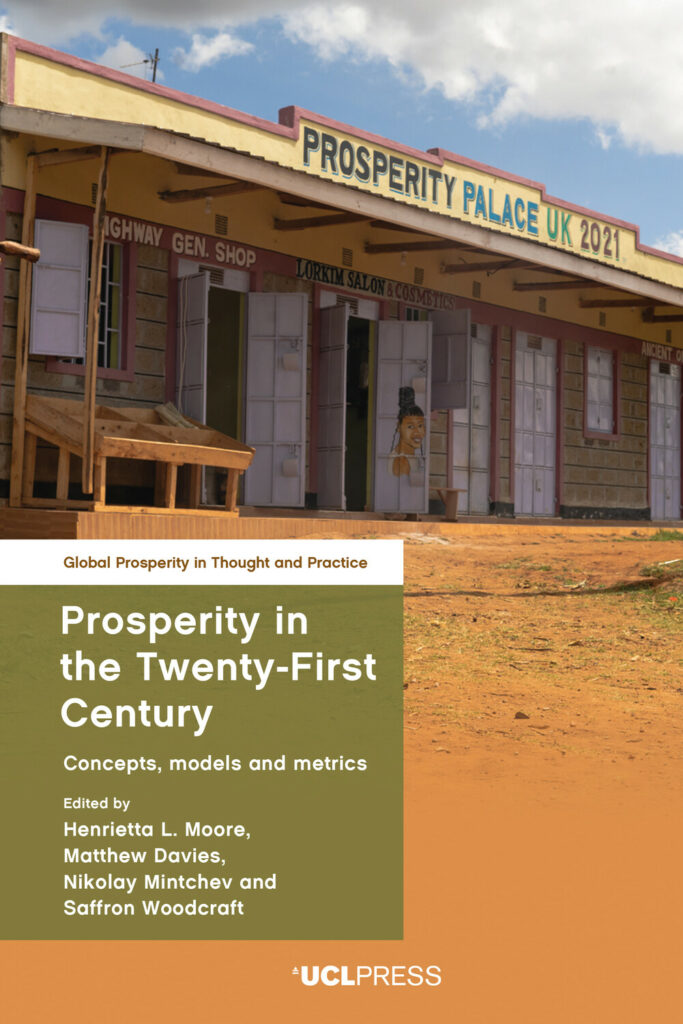
Prosperity in the Twenty-First Century
Concepts, models and metrics
Series: Global Prosperity in Thought and Practice
Publication date: June 22, 2023
Open Access PDF ISBN: 9781800084452
Paperback ISBN: 9781800084469
Hardback ISBN: 9781800084476
Trim size (hardback): 23.4cm x 15.6cm
Trim size (paperback): 23.4cm x 15.6cm
Prosperity in the Twenty-First Century sets out a new vision for prosperity in the twenty-first century and how it can be achieved for all.
The volume challenges orthodox understandings of economic models, but goes beyond contemporary debates to show how social innovation drives economic value. Drawing on substantive research in the UK, Lebanon and Kenya, it develops new concepts, frameworks, models and metrics for prosperity across a wide range of contexts, emphasising commonalities and differences. Its distinctive approach goes beyond defining and measuring prosperity – addressing the debate about the failures of GDP – to formulating and describing what is needed to make prosperity a realisable proposition for specific people living in specific locales.
Departing from general propositions about post-growth to delineate pathways to prosperity, the volume emphasises that visions of the good life are diverse and require empirical work co-designed with local communities and stakeholders to drive change. It is essential reading for policymakers who are stuck, local government officers who need new tools, activists who wonder what is next, academics in need of refreshment, and students and people of all ages who want a way forward.
‘Eight papers explore what prosperity means and entails for local communities on the ground, how they conceive of it, and how they can be involved in its design, delivery, mobilization, and implementation, focusing on rural and urban examples from the Middle East, Europe, and Africa.’
Journal of Economic Literature
‘A timely collection of thoughtful essays, addressing one of the most vital questions of our time. From London to the Lebanon and beyond, Moore and her team ask what prosperity can possibly mean – not in the abstract, but as lived experience – within the finite limits of planet Earth.’
Tim Jackson, author of Prosperity without Growth
‘This is an important and powerful account of how public policy formulation should be reconceived to promote shared prosperity beyond conventional economic performance. It demonstrates that this approach can be applied in an array of localities facing very different challenges from London to Kenya and Lebanon. It is of profound significance for policymakers and practitioners around the world.’
Colin Mayer, University of Oxford
‘This is a book for our time. It comes at a moment of protracted global recession and environmental crisis, and a broadening recognition that conventional economic instruments are failing to protect people and our planet. It offers authoritative analysis, transformative pathways and reason to hope. Above all, it shows how prosperity, differently understood, resides in the people who live it.’
Jo Beall, London School of Economics and Political Science