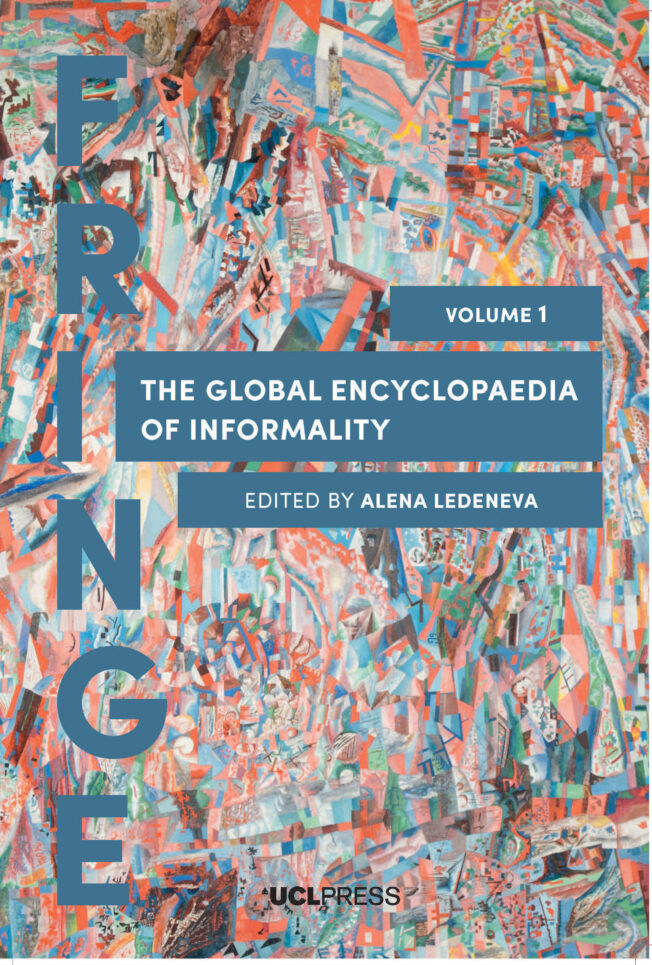

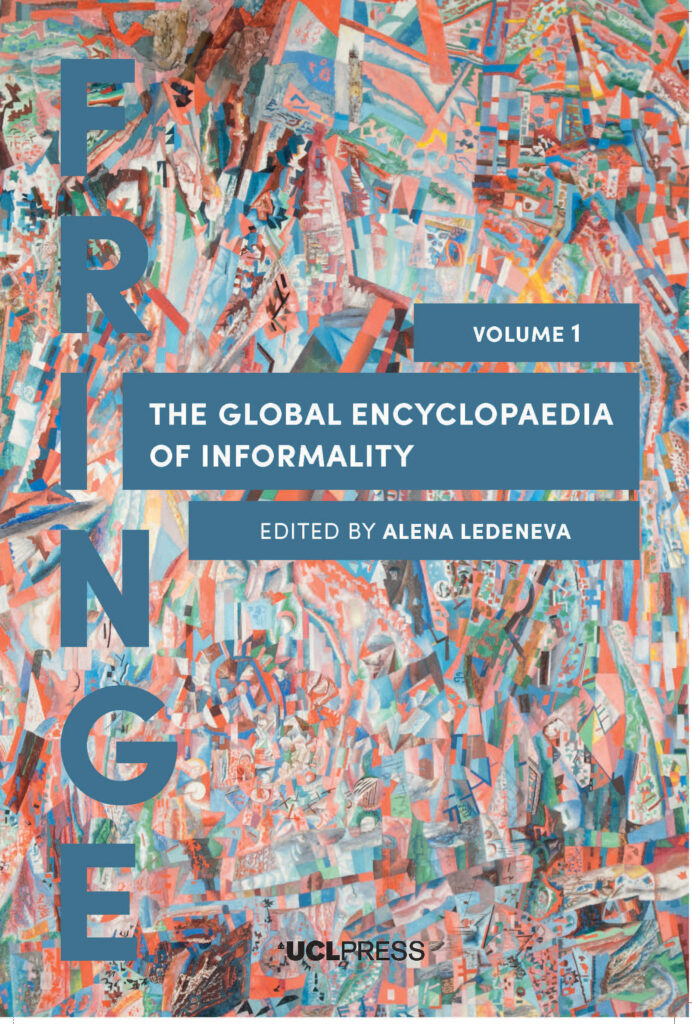
The Global Encyclopaedia of Informality, Volume 1
Towards Understanding of Social and Cultural Complexity
Alena Ledeneva (Editor)
Series: FRINGE
Alena Ledeneva invites you on a voyage of discovery, to explore society’s open secrets, unwritten rules and know-how practices. Broadly defined as ‘ways of getting things done’, these invisible yet powerful informal practices tend to escape articulation in official discourse. They include emotion-driven exchanges of gifts or favours and tributes for services, interest-driven know-how (from informal welfare to informal employment and entrepreneurship), identity-driven practices of solidarity, and power-driven forms of co-optation and control. The paradox, or not, of the invisibility of these informal practices is their ubiquity. Expertly practised by insiders but often hidden from outsiders, informal practices are, as this book shows, deeply rooted all over the world, yet underestimated in policy. Entries from the five continents featured in this volume are samples of the truly global and ever-growing collection, made possible by a remarkable collaboration of over 200 scholars across disciplines and area studies.
By mapping the grey zones, blurred boundaries, types of ambivalence and contexts of complexity, this book creates the first Global Map of Informality. The accompanying database is searchable by region, keyword or type of practice, so do explore what works, how, where and why!
Related titles
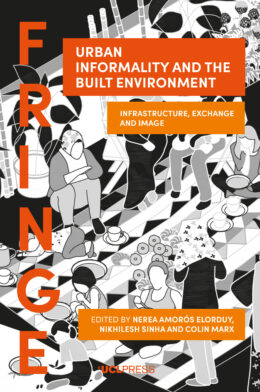
Urban Informality and the Built Environment
Nerea Amorós Elorduy, Nikhilesh Sinha, Colin Marx,
12 March 2024
The Global Encyclopaedia of Informality, Volume 1
Towards Understanding of Social and Cultural Complexity
Alena Ledeneva invites you on a voyage of discovery, to explore society’s open secrets, unwritten rules and know-how practices. Broadly defined as ‘ways of getting things done’, these invisible yet powerful informal practices tend to escape articulation in official discourse. They include emotion-driven exchanges of gifts or favours and tributes for services, interest-driven know-how (from informal welfare to informal employment and entrepreneurship), identity-driven practices of solidarity, and power-driven forms of co-optation and control. The paradox, or not, of the invisibility of these informal practices is their ubiquity. Expertly practised by insiders but often hidden from outsiders, informal practices are, as this book shows, deeply rooted all over the world, yet underestimated in policy. Entries from the five continents featured in this volume are samples of the truly global and ever-growing collection, made possible by a remarkable collaboration of over 200 scholars across disciplines and area studies.
By mapping the grey zones, blurred boundaries, types of ambivalence and contexts of complexity, this book creates the first Global Map of Informality. The accompanying database is searchable by region, keyword or type of practice, so do explore what works, how, where and why!
Philly Biz Leaders’ Must-Read Books of 2018: ‘This unique work collaborates with more than two hundred scholars across the globe, illustrating how informal practices are deeply embedded across the planet, playing a crucial role in truly “getting anything done” while still remaining underestimated in policy-making procedures and business life. The book puts international human behavior into perspective, and is wholly mesmerizing.’
Philadelphia Magazine
‘Suited for graduate students, scholars, and professionals. Recommended.’
Choice
‘This unique work collaborates with more than two hundred scholars across the globe, illustrating how informal practices are deeply embedded across the planet, playing a crucial role in truly “getting anything done” while still remaining underestimated in policy-making procedures and business life. The book puts international human behavior into perspective, and is wholly mesmerizing.’
Philly Biz Leaders’ Must-Read Books of 2018, Philadelphia Magazine
‘The Global Encyclopaedia of Informality represents the beginning of a new era in informality studies. With its wealth of information, diversity, scope, theoretical innovation and artistic skill, this collection touches on all the aspects of social and cultural complexity that need to be integrated into policy thinking.’ – Predrag Cvetičanin
‘An impressive, informative, and intriguing collection. With evident passion and patience, the team of 250 researchers insightfully portrays the multiplicity of informal and often invisible expressions of human interdependence.’
Subi Rangan, Professor of Strategy and Management, INSEAD, Fontainebleau, France
‘Don’t mistake these weighty volumes for anything directory-like or anonymous. This wonderful collection of short essays, penned by many of the single best experts in their fields, puts the reader squarely in the kinds of conversations culled only after years of friendship, trust, and with the keen eye of the practiced observer. Perhaps most importantly, the remarkably wide range of offerings lets us ‘de-parochialise’ corruption, and detach it from the usual hyper-local and cultural explanations. The reader, in the end, is the one invited to consider the many and striking commonalities.’ – Bruce Grant, Professor at New York University and Chair of the US National Council for East European and Eurasian Research
‘This compendium of terms used in different cultures to express aspects of informal economy provides unique supplement to studies of a major yet badly understated by academic economics’ social issue. It will be of major significance for in-depth teaching of sociology, economics and history.’
Teodor Shanin, OBE Professor and President of the Moscow School of Social and Economic Sciences
‘Alena Ledeneva’s Global Encyclopedia of Informality is a unique contribution, providing a global atlas of informal practices through the contributions of over 200 scholars across the world. It is far more rewarding for the reader to discover how commonalities of informal behavior become apparent through this rich texture like a complex and hidden pattern behind local colors than to presume top down universal benchmarks of good versus bad behavior. This book is a plea against reductionist approaches of mathematics in social science in general, and corruption studies in particular and makes a great read, as well as an indispensable guide to understand the cultural richness of the world.’ – Alina Mungiu-Pippidi, Professor of Democracy Studies, Hertie School of Governance, Berlin